
What is consignment selling on Whatnot?
How Whatnot consignment works: what to agree with consignors, how Whatnot's fees change the split, when consignors get paid, and how to keep it straight.
If you’ve heard sellers talk about “running consignment” or “taking consignors” on Whatnot, here’s what it actually means, how the money works once Whatnot takes its fees, and what to agree before the first item sells.
The short answer
Consignment selling is when a Whatnot seller sells items on behalf of other people — consignors — during their live shows, and splits the money with them. The consignor owns the item until it sells. The seller brings the audience, runs the show, ships the order, and takes an agreed cut; the consignor gets the rest.
It’s a win-win: the consignor moves inventory without running their own show, and the seller fills more airtime with more product without buying it all upfront.
How it works, step by step
- The consignor sends items to the seller (or drops them off).
- They agree on the terms: the split, who covers Whatnot’s fees, and when payouts happen.
- The seller tags each item to its consignor, so every listing says whose it is.
- The seller lists and sells the items live on their show.
- Each sale is attributed to the right consignor as it happens.
- The seller pays out each consignor their share, with a record of what sold.
What to agree before anything sells
Most consignment fallouts trace back to something nobody wrote down. Settle these four things first:
- The split. There’s no single standard, but most deals land between 60/40 and 80/20 in the consignor’s favor. Higher-value items, easy sellers and big consignments push it toward the consignor; items that need a lot of photographing, sizing or sorting push it toward the seller. More in consignment splits explained.
- Who covers Whatnot’s fees. Whether you split what the sale earned after fees, or split the sale price and the seller covers the fees. This changes every payout, so see the worked example below.
- When payouts happen. Per show, weekly or monthly, or once Whatnot releases the money.
- Anything else that costs money. Shipping supplies, returns, and what happens to items that don’t sell.
How Whatnot’s fees change the split
Whatnot takes two fees on every sale: a commission on the item price, and a payment processing fee on everything the buyer paid, including shipping. Say a consignor’s item sells for $40, the buyer pays $5.99 shipping and no sales tax, you’re at the 8% commission rate, and the split is 60% to the consignor:
- Whatnot’s commission: 8% of the $40 item price = $3.20.
- Payment processing: 2.9% of the $45.99 the buyer paid, plus 30 cents = $1.63.
- What the sale earned after fees: $40 − $3.20 − $1.63 = $35.17.
| How you agreed to handle fees | Consignor gets | You keep |
|---|---|---|
| Split after Whatnot’s fees | 60% of $35.17 = $21.10 | $14.07 |
| Split the sale price, you cover the fees | 60% of $40 = $24.00 | $16.00 − $4.83 = $11.17 |
That’s a $2.90 difference on one $40 item. Rates vary by category and sales tier; the fee calculator shows Whatnot’s current rates, and the split calculator runs your own numbers.
When consignors get paid
Whatnot pays the seller, and the seller pays the consignor. There’s no Whatnot rule for when, only the agreement. Whatnot usually releases a seller’s earnings only after each order is delivered, so paying per show can mean paying before that money reaches you. Some sellers batch payouts weekly or monthly instead, or wait until a show’s earnings reach the bank. Whichever you choose, tell the consignor up front. How consignors get paid on Whatnot walks through it, including what a payout record should show.
Who consignment is for
- Sellers who want more inventory and more airtime without buying everything themselves.
- Consignors — collectors downsizing, small shops without an audience, or people who just don’t want to run a live show — who want their items sold by someone with a following.
The hard part: keeping it straight
The selling is easy. The accounting is what trips people up: which item belonged to whom, what sold, what each person is owed after the split and the fees, and proving it. Done by hand it’s a spreadsheet nightmare — and payout disputes are the fastest way to lose a consignor’s trust.
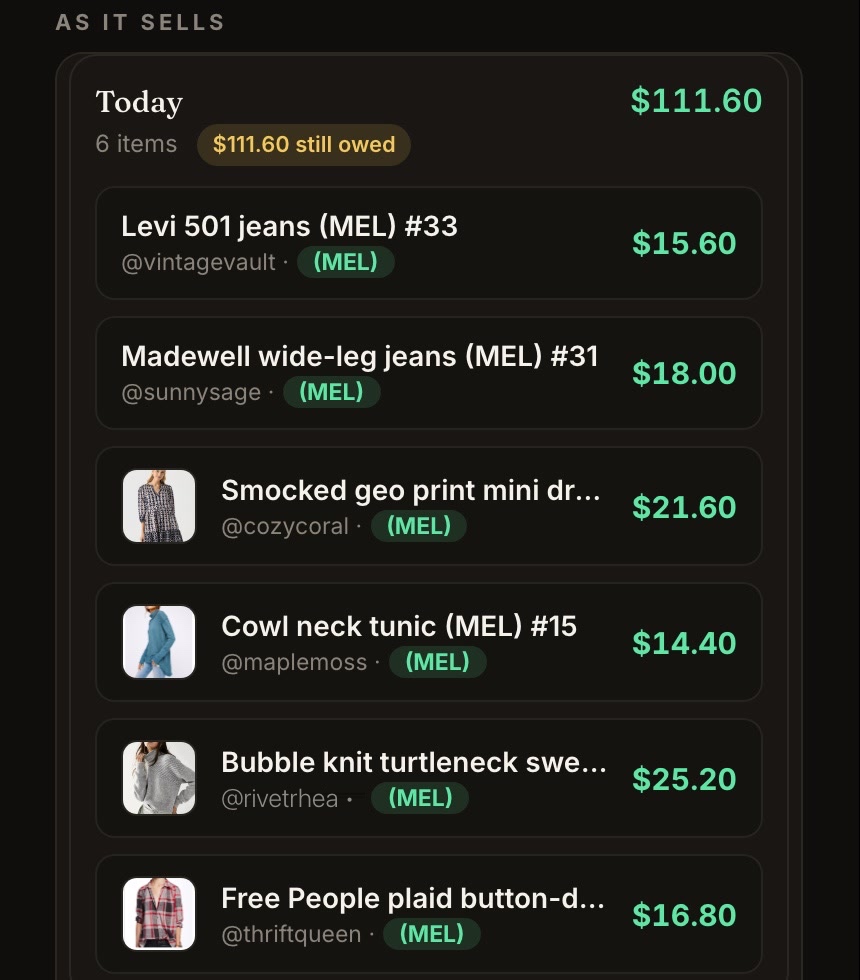
That’s the whole reason the Backstage Consignor portal exists. The seller runs consignment on iPad or Chrome; each sale is auto-attributed to the right consignor, splits are calculated automatically, and each consignor gets a free portal showing exactly what’s sold and what they’re owed — so nobody has to DM “what do I get?”
Next steps
- Selling for others? Read how to manage consignors on Whatnot.
- Comparing tools? See the best Whatnot consignment tracking tool.
- Consigning your items? See how to track what you’re owed.
- Curious about the math? Read consignment splits explained.